
There’s a moment that happens somewhere around the sixth week of the school year. You’re not thinking about it when it occurs. It just happens. A student drops their pencil case, and without a word, three others are on the floor helping. Another child shares something personal during morning meeting, and the room sits in respectful silence rather than erupting in giggles. A group project runs itself because the team has figured out how to navigate disagreements without you.
I’ve seen this moment play out across very different settings. When I started teaching high school history back in 2007, I thought community building was something elementary teachers worried about. My job was content, right? Then I spent a decade teaching everywhere from a nationally ranked academic school to a Title I CTE program, working with over 1,700 students. The ones who struggled weren’t the ones who couldn’t grasp historical concepts. They were the ones who never felt like they belonged in that classroom.
Since 2018, I’ve been training K-12 teachers on student-centered learning, and if there’s one thing I’ve learned, it’s this: community building in the classroom activities aren’t fluff. They’re the foundation that makes everything else possible.
Why Community Matters More Than Curriculum (At First)
Here’s what I didn’t understand as a new teacher. You can have the most beautifully designed lessons on your drive, but if students don’t trust each other (and don’t trust you), those lessons land on fallow ground. Classroom community activities create what I call the “social safety net.” When students know their classmates have their backs, they’re willing to take intellectual risks. They’ll share half-formed ideas. They’ll admit when they’re confused. They’ll push back respectfully when they disagree.

The research backs this up. According to the Collaborative for Academic, Social, and Emotional Learning (CASEL), students in classrooms with strong community demonstrate greater academic motivation and fewer behavioral issues (Meta-Analysis). But here’s what the studies don’t capture: the feeling when a shy student finally speaks up because they know the group will listen.
Starting Strong: The First Day Through First Week
The beginning of the year sets everything in motion. I learned this the hard way, my first year teaching. I jumped straight into content, figuring we’d build relationships along the way. By October, I had a room full of strangers who happened to occupy the same space.
Now I tell teachers: invest heavily in the first week of school. Those early days aren’t lost instructional time. They’re compound interest on your classroom culture.
Morning Meetings That Actually Work
Morning meetings became my non-negotiable routine, even with high schoolers. Yes, teenagers will groan at first. But here’s the secret: keep it short, keep it consistent, and let student input shape it. We’d spend ten minutes at the start of each class doing what I called “the check-in.” Sometimes it was as simple as going around and each person sharing one word about how they were showing up that day. Other times, we’d use more structured community building activities.
One favorite was “Two Truths and a Lie.” It sounds basic, I know. But when a tough kid from my CTE program shared that he’d once won a regional welding competition, and a quiet girl revealed she’d lived in three countries, the room shifted. They started seeing each other as people, not just desk-mates.
Building Blocks for the Whole Year
The mistake many teachers make is treating community building as a first-week-only project. You wouldn’t exercise for one week and expect to stay fit all year. The same logic applies here. The best classroom community-building activities weave connection into your regular routines.
Group Salutes and Circle Time
With younger students, I’ve watched teachers use “group salutes” as a quick way to celebrate wins. A student shares something they’re proud of, and the whole class responds with a silent cheer, waving hands in the air. It takes five seconds but builds that sense of mutual respect I’m always chasing.
For older students, circle time looks different but serves the same purpose. When I taught high school, we’d sometimes rearrange desks into a circle for discussions. Something about removing the physical barriers changed how students talked to each other. They made eye contact. They built on each other’s ideas. The circle signaled that we were all in this together.
The Name Game That Does More
Here’s a simple activity that works across grade levels. On the first day of school, I’d write every student’s name on the board in different colors. Then I’d ask them to find their name, but here’s the twist. They had to find it in their favorite color. That small detail mattered. It told each student, “I thought about you as an individual before you ever walked in.”
Then we’d play a version where students had to match names to faces. Shy students could participate without speaking much at first. By the end of the first week, everyone knew everyone’s name. That sounds basic, but think about how it feels when someone consistently forgets your name. Now imagine the opposite…walking into a room where everyone greets you by name. That’s the foundation of a safe space.
Activities That Build Real Skills
Community building isn’t just about feeling good. It’s about equipping students with social skills they’ll actually use. When I train teachers now, I emphasize that the best activities teach something transferable.

The Listening Jar
This remains one of my favorite ways to build attention and respect. Give each student a piece of paper. Write an action verb on the board…walk, run, skip, hop. Ask students to quietly walk around and write down their favorite action verb. Collect the papers, then have students circle verbs that multiple people chose.
When each student shares why they picked their word, something interesting happens. They start noticing connections. “Oh, you picked ‘run’ because you’re on the track team? I didn’t know that.” The activity requires almost no materials but creates those small moments of discovery that build community over time.
You can always switch this up with vocab words, locations, etc. The possibilities are really endless and can easily connect right back to the curriculum.
Partner Scavenger Hunt
With older students, I’d adapt this into something more complex. Create index cards with different resource types…shared resources, common resources, inaccessible resources. Students pair up with someone they don’t know well. Then they search for others with matching cards.
The magic happens in the searching. They have to talk to each other, strategize, and communicate across the room. When they find their match, they switch cards and keep going. It’s movement, it’s conversation, and it teaches vocabulary they’ll actually remember because they lived it.
Chips Challenge
This team-building activity became legendary in my classroom. I’d create numbered chips in different colors: yellow chips worth one point, orange worth two, and so on. Students worked in small groups with a shared goal: to get the highest score possible without exceeding 100 points.
Here’s where it gets interesting. Groups quickly realize they need to trade with other groups to stay under the limit. They have to negotiate, collaborate, and sometimes make sacrifices for the good of the whole class. The competitive instinct gets redirected into cooperation. Students learn that helping another group doesn’t hurt them…it might even help.
I watched a group of tough CTE kids, the ones who’d never worked together before, spend twenty minutes strategizing trades. They weren’t thinking about “community building.” They were just solving a fun problem. But the effect was the same.
Adapting Across Age Levels
What works for younger students won’t always work for high school, and vice versa. With elementary students, you might use more movement and games. With older students, you can layer in more complexity and reflection.
For Younger Students
Keep it simple and physical. Brain breaks that get kids moving work wonders. A quick dance party between lessons resets energy and builds shared joy. Group work should be short and structured. Clear roles help students learn to function as team members without confusion.
I’ve seen kindergarten teachers use “positive notes” as a daily practice. Students write (or dictate) one nice thing about a classmate. The teacher reads them aloud during circle time. That simple routine builds emotional well-being and teaches students to look for the good in each other.
For Middle and High School
With older students, the activities need more intellectual weight. They’ll see through fluff instantly. But they’ll engage deeply with complex tasks that require real collaboration.
One activity I used with high schoolers: give each group a different culture to research…not just facts, but values, communication styles, and community norms. Then have them teach each other. The act of becoming experts and then sharing builds both knowledge and respect for different cultures.
Field trips also become powerful community builders at this age. Taking students out of the school environment creates shared experiences they’ll reference all year. When you’ve navigated transportation together or helped at a community service site, you’ve built bonds that transfer back to the classroom.
The Technology Question
Teachers often ask me about using tools like Jamboard for community building. Here’s my take: technology should serve connection, not replace it. Jamboard can be a great way for shy students to contribute ideas without speaking in front of the whole class. But it shouldn’t become a substitute for face-to-face interaction.

I’ve used digital tools effectively for things like collaborative anchor charts. Students add their ideas to a shared document, and then we discuss as a class. The technology makes the process smoother, but the real community building happens in the discussion.
When Things Get Hard
Let’s be honest: some years are harder than others. Some groups of students arrive carrying trauma, conflict, or simply mismatched personalities. Building community takes longer. You’ll have setbacks.
I remember one particularly difficult class where nothing seemed to work. Every team-building activity fell flat. Students resisted group work. Disruptive behavior was constant. About six weeks in, I was ready to give up on community and just survive.
Then, during a field trip to a local community organization, something shifted. Students had to work together on a project, and the external context changed the dynamic. They forgot to be difficult because they were focused on the task. On the bus ride back, they were laughing together. It wasn’t an overnight transformation, but it was a crack in the wall.
The lesson: keep trying. Keep offering opportunities for connection. You never know which activity will be the one that finally breaks through.
Measuring What Matters
How do you know if your community-building efforts are working? You’ll see it in the small moments. Students helping each other without being asked. Respectful disagreements during discussions. Kids including the isolated student in their group without prompting.
You might also see significant improvements in participation and engagement. Students who rarely spoke start contributing. Attendance improves. The feeling in the room shifts from tension to ease.
One measure I’ve come to trust: how students treat each other when they think no adults are watching. If you can walk by your classroom during lunch or passing period and hear genuine laughter and conversation, you’ve built something real.
Practical Takeaways
If you’re planning your own classroom community-building activities, here’s what I’ve learned:
Start on day one. The first day of school sets expectations. Use that time to signal that this room will be different…a place where everyone belongs.
Be consistent. Morning meetings, circle time, or whatever routine you choose needs to happen regularly. Students need to know they can count on these moments.
Mix it up. Use different types of activities throughout the school year. Some days it’s a fun game. Other days, it’s a serious discussion about classroom norms. Variety keeps it fresh.
Connect to real life. The best activities teach skills students will actually use…how to listen, how to disagree respectfully, how to support teammates.
Include everyone. Design activities that work for shy students and outgoing ones, for kids who need movement and those who need quiet. True community leaves no one out.
Reflect and adjust. Pay attention to what’s working and what isn’t. Be willing to change course mid-year if your current approach isn’t building the community you want.
The Deeper Purpose
Here’s what I want you to understand. Community-building in the classroom activities aren’t just about making school more pleasant, though they do that. They’re about preparing students for a world that requires collaboration across differences.
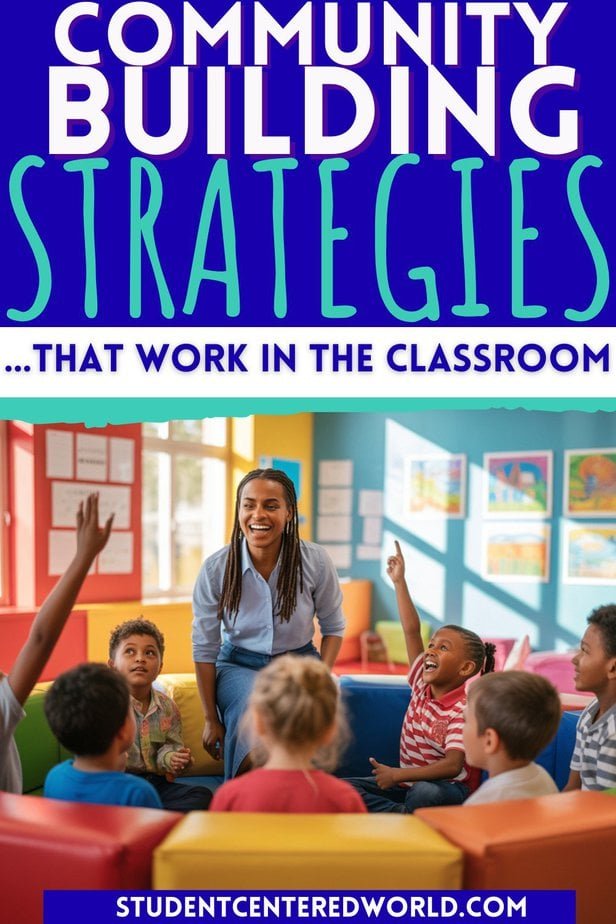
When students learn to work in small groups, to navigate disagreements, to support each other through challenges, they’re building skills they’ll need for the rest of their lives. The workplace demands collaboration. Healthy relationships require empathy. Strong communities depend on people who can work together toward shared goals.
Your classroom is where this learning happens. Every time you facilitate a team-building activity, every time you structure group work thoughtfully, every time you help students resolve conflict, you’re teaching something that matters far beyond your content area.
Moving Forward
The specific activities I’ve shared here are just starting points. Adapt them to your students. Create your own variations. Pay attention to what resonates and remember: building community takes time. You won’t see results overnight. But if you keep showing up, keep facilitating connection, keep believing that every student deserves to belong, you’ll build something that lasts.
I’d love to hear what works in your classroom. What activities have built community for your students? What challenges are you facing? Drop your thoughts in the comments, and let’s keep learning from each other.
After all, that’s what community does.
This article was originally published on September 29, 2021.