

All teachers are expected to have a classroom management philosophy, but what does this actually mean (and what should it look like in a 21st-century classroom)?
The answer depends on three things: the teacher’s purpose, the learners’ needs, and a good understanding of how young people develop in a digital age. In other words, classroom management is about building positive relationships with students from whom you expect high levels of engagement.
This looks drastically different in today’s classroom than it did even 10 years ago.
When we learn about classroom management philosophy, we are taught that students are expected to sit quietly and do work from “bell to bell.” Though I agree that work from “bell to bell” (minus brain breaks) is still relevant, in a student-centered classroom where students are collaborating, exploring, and getting EXCITED about what they are doing, it just isn’t realistic to expect a quiet environment.
Much more classroom management is happening than first meets the eye, and embracing this is a huge piece of a 21st-century classroom management philosophy.
In its simplest form, one of the most “radical” things about a thriving classroom environment that meets the needs of our current learners is that it is a noisy classroom…and that’s okay!
This is a scary concept for a lot of teachers. There is a misconception that being loud means a lack of control and that your classroom management philosophy is shot. In many cases, that is certainly true. But in a truly student-centered environment, anyone curious about the noise comes to take a look for themselves and see all the action taking place in the classroom.
Of course, make sure your students understand that if you have thin walls, they can disturb other classes around you. A student-centered classroom isn’t an opportunity to be rude to your colleagues. But there are many ways to make sure your students keep it at a dull roar (a noise meter, for example) while keeping your classroom management philosophy intact.
Why Trust This Guide?
I started teaching in 2007, and I’ve taught just about every high school history class offered, on every level, working with students from diverse backgrounds and with a wide range of learning styles. I’ve developed my own classroom management philosophy through trial and error, successes and failures, and countless conversations with colleagues, school principals, and mentors.
I’ve also made plenty of mistakes along the way. I’ve had classes that felt like they were spiraling out of control. I’ve had moments where I questioned whether I was cut out for this work. But through it all, I’ve learned that effective classroom management isn’t about control. It’s about connection.
Why a Noisy Classroom is Okay
I am not saying your classroom should be a free-for-all. Classroom activities need to be carefully crafted so that, even though students are up, moving, and talking (sometimes loudly), they have a purpose. If you’re encouraging flexible seating and student choice, you need to expect some noise.
You will have a loud classroom. You need to be okay with that.
To boot, in my classroom, I always had music playing on top of it all. My room always looked like a party, which, to some, might look like it “isn’t supposed to.” However, if they take a few minutes to come in and look around (I encourage the concept of #observeme), they will realize that the students are completing more engaging work with a deeper understanding than if they were sitting quietly…the noisy classroom just means they’re learning.

I had a colleague who was very interested in how I ran my “loud classroom,” so she peeked her head in one day when it sounded like all-out hysteria. I had a class of 30, and they were all loud…but they were good kids and worked hard…and fairly early on in the semester, they bought into student-centered learning.
Her question, with a smirk, was, “Are any of them actually working?”
I smiled and brought her around. They were making time capsules to represent events from the 1970s. I had her pass by each group, and they explained to her what they were making. In detail, they showed her what the artifact was, why they decided to make it, and what it represented…other than me asking them to explain what they were doing, they rattled off all that information without prompting.
It’s chaos, but it’s organized chaos!
When the public school system was first created, it was an industrial model to train students for the industrial world. Think of a traditional classroom, and it resembles that of a factory. Everyone sits in a row, quietly does what they’re told, and completes the same assignment in the same way at the same time.
Now, think of the world we live in today. The industrial model of education simply would not prepare students for the jobs of the future. They are almost all hands-on or critical thinking-based.
Having an active student-centered learning environment and a loud classroom (that is encouraged by your classroom management philosophy) is the best way to prepare our students for the workforce, which is the sole purpose of education at every level.
Why Today’s Classroom is Different
We are in a mad rush of change. I have mentioned it before, but to say it again: we are preparing our students for jobs that don’t exist yet.
Truly…think back a decade. How many social media managers did you know? Uber drivers? Airbnb hosts?
Things that are commonplace today were just coming into existence a mere decade ago. Imagine what is to come in the decade ahead of us.
The World Economic Forum estimates that 65% of children today will end up in careers that don’t even exist yet.
65%?! This even more solidifies that the argument of “but we’ve always done it this way” is not only outdated but completely irrelevant. How can we continue doing what we’ve always done if the outcome needs to be completely different for 65% of the population we serve?
We need to do things differently. Your classroom management philosophy must reflect this.

Our students need to be active and engaged, and we need to encourage a loud classroom that is full of action and engagement. We need to be certain they are gaining the soft skills necessary in the world, which they are not necessarily getting naturally as generations past have.
Generation Z and Generation Alpha are learning differently than previous generations…we need to make sure we are giving them the best possible experiences to prepare them for the real world.
Honing in On Your Personal Classroom Management Philosophy
To develop your own classroom management philosophy, start by considering the key elements that will shape your approach. Your discipline philosophy should focus on creating a safe environment that fosters mutual respect and promotes positive behaviors. Begin by setting clear expectations and using positive reinforcement as essential tools for encouraging desired behavior. Recognize and respect cultural differences and individual backgrounds in your classroom, as this will help create a diverse and inclusive classroom community.
An effective teacher’s classroom management plan should be built on best practices and informed by your personal experiences. Emphasize open communication with your students, and involve them in class meetings to discuss behavior issues and foster a problem-solving atmosphere. Draw inspiration from well-known discipline models like Linda Albert’s “assertive discipline” and William Glasser’s “choice theory” to shape your philosophy statement. Keep in mind that effective classroom management ultimately supports students’ learning experiences and academic success.
As you define your personal classroom management philosophy, consider specific examples that align with your own beliefs and values. Your management style should prioritize the most important thing: creating a positive learning environment where students feel a sense of community and have a voice. Share your ideas with colleagues and school principals, and don’t hesitate to reach out to experienced educators or mentors for guidance, as they can offer valuable insights.
Remember that the teacher’s role goes beyond lesson plans and teaching methods; it includes maintaining discipline in the classroom, addressing inappropriate behavior, and guiding students’ behavior in a challenging environment. Maintain a positive attitude and pay attention to body language, as these non-verbal cues play a crucial role in classroom management.
In your classroom procedures, consider personal examples, supplemental materials, and positive consequences to reinforce good behavior. Develop your own set of rules and engage students in this process, allowing them to have a say in classroom management, as this promotes ownership and a sense of responsibility. As in a well-managed classroom, keep your ultimate goal in mind: to create an ideal classroom that upholds academic integrity and supports a positive learning experience for all students.
Reflecting on Student Learning in Your Classroom Management Philosophy
An accurate classroom management philosophy has three pieces: students, teachers, and behavior. You need to determine each person’s responsibility to create that plan. If you are going to teach your students how to be productively engaged, your plan needs to reflect how that will work for each stakeholder in a lesson.
The focus needs to be on building those relationships so students feel safe taking risks and speaking up to participate effectively. They also need to know the boundaries of that risk-taking. While we want our students to engage in the conversations and activities we prepare for them, we also don’t want them to dominate the classroom environment or squash other students’ opportunities to participate.
Classrooms that turn into a free-for-all when attempting a student-centered model lack a defined classroom management philosophy: the teacher is just throwing spaghetti at the wall to see what sticks. When a defined plan is in place, students learn their roles and responsibilities to themselves and each other within the classroom environment, and true learning can occur.
3 Quick-Start Ideas for Creating Your Plan
When you’re ready to put your classroom management philosophy into action, it helps to have a few concrete strategies to get you started. These three quick-start ideas are designed to be simple, practical, and immediately applicable in your classroom.
First, consider creating a character education program to complement your classroom rules. This isn’t about adding another thing to your already full plate. It’s about integrating character development into the daily fabric of your classroom. Get your students involved so they own these expectations and can enforce them with each other when necessary. When students help create behavior standards, they’re far more likely to hold themselves and their peers accountable. If you want things done, let the kids do it. They will surprise you with how seriously they take the responsibility.
Second, make sure you know your role in the classroom. Are you the facilitator or the monitor? The leader or the dictator? These distinctions matter more than you might think. A facilitator creates conditions for learning and steps back to let students take ownership. A monitor watches for problems and intervenes when necessary. A leader inspires and guides. A dictator controls and commands. You need to know which role you’re playing at any given moment, and you need to help each student adopt that same perspective. When everyone understands their role, the classroom runs more smoothly, and students take more responsibility for their own learning.
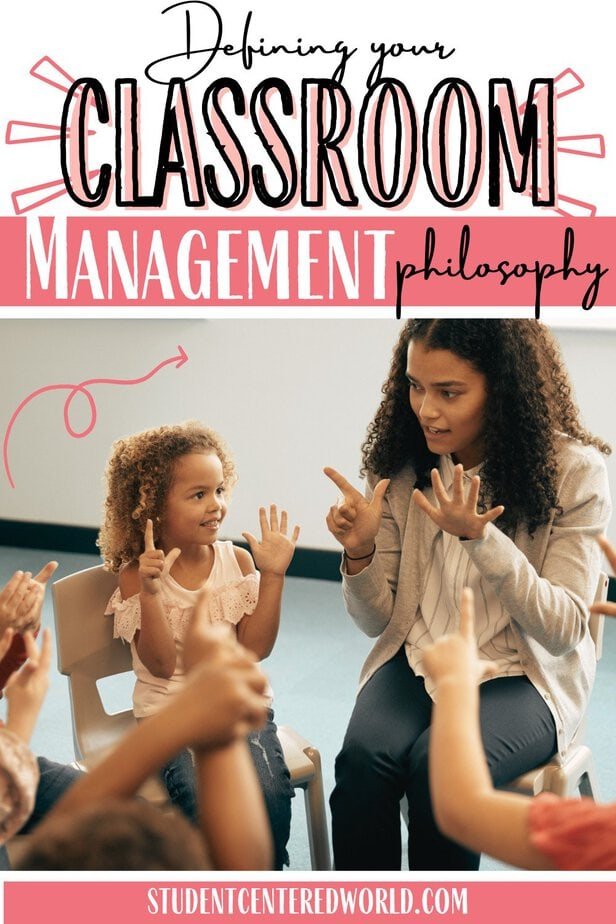
Third, create a “rule of 3” for off-task behavior. When a student is off-task, remind them they have three seconds before you redirect their attention to your behavioral expectations. It might feel fast, but consistency is the key. Do it every time so they know you are serious and not just picking on them. The “rule of 3” gives students a brief window to self-correct before you step in. It respects their autonomy while also maintaining clear boundaries. If they can’t snap out of it within three seconds, then redirection is necessary. But more often than not, you’ll find that students appreciate the chance to fix the behavior on their own.
Common Mistakes to Avoid
Over the years, I’ve seen teachers make the same mistakes when developing their classroom management philosophy. Some of these mistakes come from good intentions. Others come from a misunderstanding of what effective classroom management actually looks like. Either way, knowing these common pitfalls can help you avoid them in your own practice.
| Mistake | The Problem | The Solution |
|---|---|---|
| Confusing control with management | A quiet classroom doesn’t mean a productive classroom. Some teachers equate silence with success, but students can be quietly disengaged just as easily as they can be loudly learning. | Focus on engagement, not silence. Look for evidence of active participation, critical thinking, and genuine interest in the material. |
| Failing to build relationships | Your classroom management plan means nothing if you haven’t built positive connections with your students. Rules without relationships lead to rebellion, not respect. | Invest time in getting to know your students as individuals. Learn their names, their interests, and their struggles. They need to know you care before they’ll care about your expectations. |
| Being inconsistent | The most effective classroom management strategies fail if you apply them inconsistently. If you enforce a rule one day and ignore it the next, your students will never know what to expect. | Apply your expectations consistently, every single day. Your students need to know what to expect from you, whether they’re having a good day or a bad day. |
| Ignoring student voice | Your classroom management philosophy shouldn’t be imposed on students; it should be developed with them. When students have no say in the rules, they have no reason to follow them. | Involve students in creating classroom norms and expectations. When students own the expectations, they’re more likely to meet them. |
| Forgetting that you’re a person too | Your own behavior, body language, and attitude set the tone for the entire classroom. If you’re stressed, frustrated, or disengaged, your students will be too. | Take care of yourself. Your energy is contagious. If you want your students to be engaged and positive, you have to model that yourself. |
| Trying to copy someone else’s style | Your personal classroom management philosophy should reflect who you are as a teacher. What works for one teacher won’t necessarily work for another. | Find what works for you and your students. Don’t try to be someone you’re not. Authenticity builds trust, and trust builds respect. |
Finding the Balance
At the end of the day, your classroom management philosophy is about one thing: creating the conditions for student success. It’s about building a classroom culture where students feel safe, valued, and ready to learn.
The most effective classroom management strategies aren’t about control. They’re about connection. They’re about building positive relationships with your students so they want to meet your expectations, not because they’re afraid of the consequences, but because they know you believe in them.
When you approach classroom management with this mindset, everything shifts. You stop seeing behavior problems as personal attacks and start seeing them as opportunities for growth. You stop trying to control your students and start trying to empower them.
That’s what a 21st-century classroom management philosophy is really about. It’s not about keeping students quiet. It’s about helping them find their voice.

How do I develop a classroom management philosophy that works for all students if I teach multiple grade levels?
This is a real challenge, especially for teachers who work across grade levels or in specialized roles. The key is to focus on the core principles that apply to all learners: mutual respect, clear expectations, and positive relationships. Your specific strategies might look different depending on the age group, but the foundation remains the same.
With younger students, you’ll likely use more visual cues, more frequent reminders, and more structured routines. With older students, you can have more nuanced conversations about expectations and involve them more directly in the goal-setting process. Regardless, at every grade level, students need to know you care about them and have high expectations for their behavior and learning.
What is the difference between a classroom management plan and a classroom management philosophy?
This distinction is important and often overlooked. Your classroom management philosophy is your underlying belief system about how students learn, what role the teacher plays, and what constitutes appropriate behavior. It’s the “why” behind your approach.
Your classroom management plan is the practical implementation of that philosophy. It includes your specific rules, routines, procedures, and consequences. It’s the “how” that brings your philosophy to life.
Think of it this way: your philosophy is the destination, and your plan is the roadmap for getting there. You need both to be effective.
How can I use restorative practices in my classroom management philosophy without letting students off the hook for their behavior?
Restorative practices are often misunderstood as being “soft” on discipline, but that’s not accurate. Restorative practices are about accountability, not punishment. The goal is to help students understand the impact of their behavior, take responsibility, and make amends.
In practice, this might look like a conversation instead of a detention. Instead of simply assigning a consequence, you sit down with the student and ask: What happened? Who was affected? How can we make it right? This approach holds students accountable while also building the social and emotional skills they need to make better choices in the future.
The key is to maintain high expectations for behavior while also recognizing that mistakes are opportunities for growth. Restorative practices don’t mean ignoring inappropriate behavior; they mean addressing it in a way that promotes learning rather than shame.
How do I handle a student who consistently disrupts class despite my best efforts at positive reinforcement?
This is one of the most frustrating situations a teacher can face. You’ve tried positive reinforcement, built a relationship, and set clear expectations, yet the behavior persists. What now?
First, recognize that some students have needs that go beyond what you can address in the classroom. They may be dealing with trauma, mental health challenges, or significant stressors outside of school. Your role is to provide a safe, supportive environment while also maintaining boundaries.
Second, don’t be afraid to involve others. Talk to school counselors, administrators, and the student’s family. A collaborative approach is often more effective than trying to solve the problem alone.
Finally, remember that behavior change takes time. A student who has been struggling for years isn’t going to transform overnight. Celebrate small wins and keep showing up consistently.
How can I create an inclusive classroom community when my students come from very different cultural backgrounds?
Creating an inclusive classroom community starts with recognizing and celebrating your students’ diversity. This means learning about their backgrounds, incorporating diverse perspectives into your curriculum, and creating space for all voices to be heard.
It also means being aware of your own biases and assumptions. Cultural differences can impact how students perceive authority, how they communicate, and what they consider appropriate behavior. What looks like disrespect to you might be a cultural norm for them.
The most important thing is to approach each student as an individual. Don’t make assumptions based on stereotypes or generalizations. Build genuine relationships with each student and create a classroom culture where everyone feels valued and respected.
How do I balance being a warm, caring teacher with maintaining authority and high expectations?
This is the eternal question for teachers, and the answer is simpler than you might think: warmth and authority are not opposites. In fact, the most effective teachers combine both. They build strong relationships with students while also maintaining clear boundaries and high expectations.
The key is consistency. Your students should know exactly what to expect from you, whether they’re having a good day or a bad day. When you’re warm and supportive, they know they can come to you with problems. When you’re firm and consistent, they know they can count on you to maintain a safe, productive learning environment.
It’s not about being one or the other. It’s about being both, all the time.
References
Albert, L. (2003). Cooperative Discipline. AGS Publishing.
Glasser, W. (1998). Choice Theory: A New Psychology of Personal Freedom. HarperCollins.
ASCD. (2022). Creating a Positive Classroom Culture. Retrieved from https://www.ascd.org/
This article was originally published on May 24, 2018
