

I remember standing in the hallway during passing period, coffee in hand, when a student I’d never taught came up to me and just started talking. About her morning. About a fight with her mom. About how she didn’t know if she could make it through the day. I didn’t know this kid, but she needed an adult who would listen, and I happened to be standing there.
That moment stuck with me. Not because it was dramatic or unusual (it wasn’t), but because it reminded me that our students carry so much more into our classrooms than their backpacks. The morning arguments, the friendship drama, the anxiety about a test. Those things don’t stay at the door. They walk right in with the kids and park themselves in the seat next to them.
I’ve seen this play out hundreds of times in different settings and with different grade levels. I’ve learned that if we don’t address what’s actually going on with young people, the academic content doesn’t stand a chance.
Here’s the thing about social-emotional learning. When most teachers hear the term, they brace themselves. Another thing to add. Another curriculum. Another training. Another way we’re supposed to fix everything, while nothing gets taken off our plates.
I get that reaction. I’ve lived it.
I started teaching high school history in 2007, and I spent years in two completely different worlds. First in a nationally ranked academic school, then in a Title I CTE school. By the time I left the classroom, I’d worked with more than 1,700 students. Since 2018, I’ve been training K-12 teachers across every kind of school you can imagine, and the number one thing I hear is still the same. “I don’t have time for this.”
I don’t argue with that. I show teachers how SEL is already happening in their rooms, and how to be intentional about it without adding a single prep period.
What Social-Emotional Learning Actually Means
Social-emotional learning is the process through which young people develop the emotional skills and social awareness they need to navigate school, relationships, and life. It covers everything from self-management to responsible decision-making, from understanding your own emotions to recognizing others’ needs. At its core, SEL helps students develop a well-grounded sense of confidence and the ability to make constructive choices across diverse situations, neurodivergent and neurotypical alike.
Here’s what that looks like in practice. A student who can name what they’re feeling instead of throwing a chair. A student who can ask for help rather than shut down. A student who can disagree with a peer without it becoming a screaming match. These are the sel skills that lead to academic success and positive outcomes in every aspect of life.
Research consistently shows that many children enter kindergarten without the social-emotional skills they need. That’s more than half of our youngest students walking into classrooms without the foundational social skills they need. Those gaps don’t magically close by third grade. They follow kids all the way through secondary education, affecting their academic development and personal growth throughout the school year.
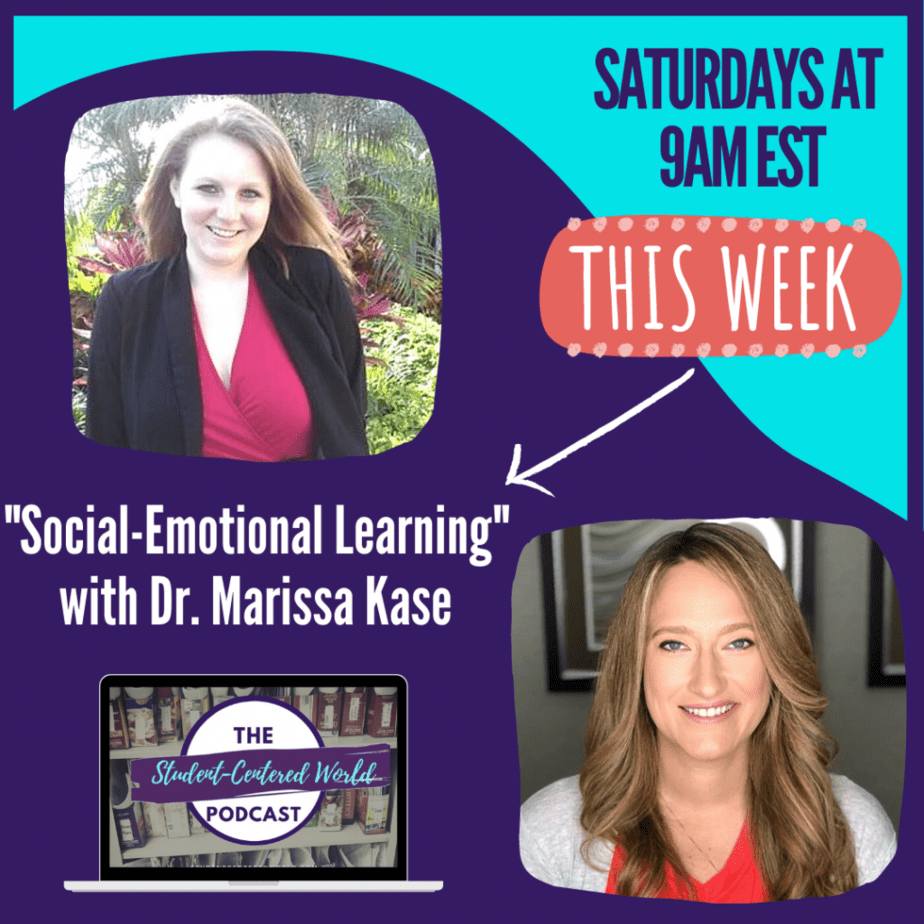
I interviewed Dr. Marissa Kase for my podcast a while back, and she made a point that stuck with me. “We all assume these are things that just happen. You just know what happy is. But these skills need to be explicitly taught.” She’s right. If everyone naturally knew how to express emotions appropriately, we wouldn’t see road rage or adults who can’t handle losing a game. These are essential life skills that require intentional instruction, just like any other subject.
Click above to listen to the podcast episode: “Social-Emotional Learning with Dr. Marissa Kase”
The Real Problem: We’re Teaching Kids Who Never Learned the Basics
Think about what happens when a student lacks self-management skills. They interrupt constantly. They don’t start work unless someone stands over them. They shut down the moment something feels hard. Their behavior becomes a barrier to learning, not because they’re bad kids, but because they have never developed the emotional skills needed to handle daily challenges.
I’ve watched this play out in real time. I had a class that was incredibly bright but emotionally brittle. The moment a task got difficult, they’d shut down completely. I spent more time coaxing them back from the edge than I did teaching content.
That wasn’t a behavior problem. That was a skill gap.
The growing body of research backs this up. Studies consistently show that students with higher emotional intelligence also have higher academic performance. It makes sense when you think about it. The kids who can sit still, ask for help when they’re confused, and persist through frustration are the ones who learn more. Those are all social-emotional skills.
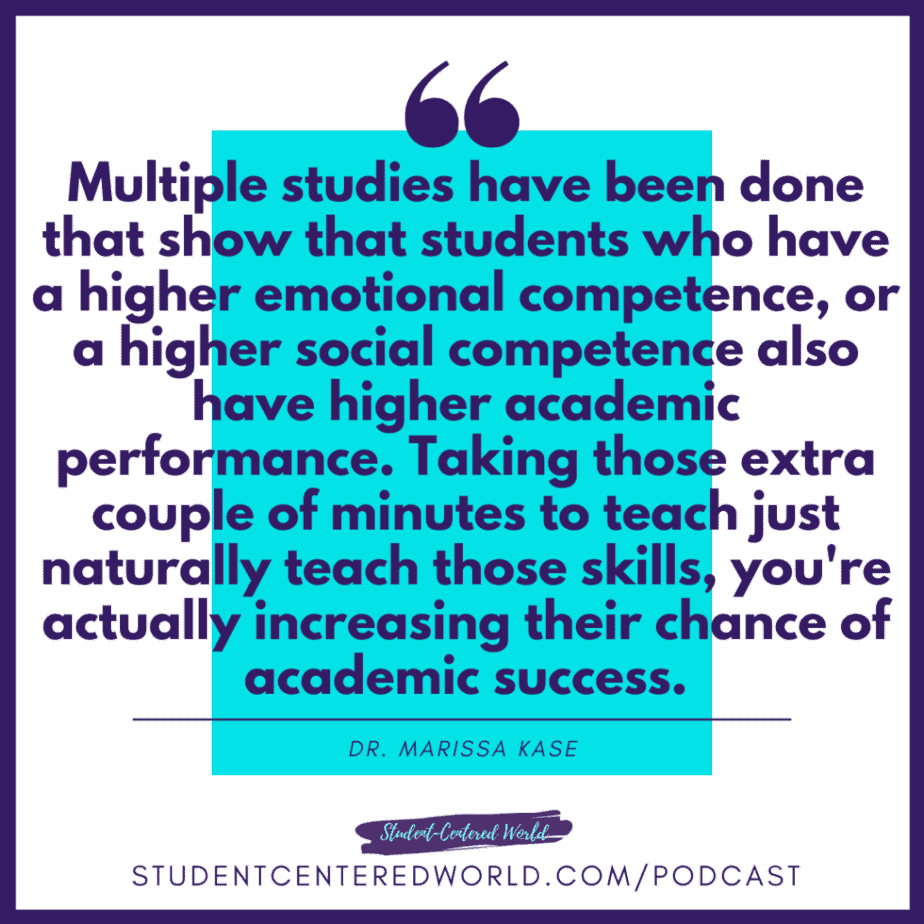
Dr. Marissa Kase put it bluntly when we talked. “If you have a student who can’t control their emotions, who can’t ask for help, who shuts down when they’re frustrated, they’re not going to learn as well. That’s the direct correlation between social-emotional learning and academic achievement.”
The research also shows that students from diverse backgrounds often face various forms of inequity, making SEL even more critical. When we create supportive environments and focus on educational equity, we help all students develop the human skills they need to succeed. This isn’t just about individual student success. It’s about collective goals and the collective well-being of the entire school community.
Embedding SEL Into What You’re Already Doing
The best way to approach SEL implementation is to stop thinking of it as separate. You don’t need a 30-minute block. You don’t need formal evidence-based SEL programs unless they genuinely work for your kids. Instead, look for what you’re already teaching and find the social-emotional learning that lives there.
Reading Lessons as SEL Opportunities
When I was teaching high school history, I used to read excerpts from primary sources. I started pausing to ask, “How do you think this person felt?” “What would you have done in their situation?” “Why did they make that choice?”
That’s social awareness. That’s perspective-taking. It takes thirty seconds. Over time, these small moments build relationship skills and help students understand social norms and interactions in ways that feel natural rather than forced.
Dr. Marissa Kase gave a great example of this with the book “Chrysanthemum.” The book is about a character who loves her name, goes to school, gets teased, and feels sad. That’s a story about bullying, sadness, and accepting differences. Three social skills in one book. If you’re already reading it as a read-aloud, you can just pause and ask: How does Chrysanthemum look like she’s feeling? What do you see in her body language that tells you she’s sad? What could her friends have done differently?
You’ve taught your reading standard and addressed social skills without adding a single thing.
Teachable Moments Over Scripted Lessons
Here’s something I learned working with teachers across different settings. Kids don’t learn social skills from worksheets. They learn from real social interactions.
When a student comes in upset about something that happened with a friend, you have a choice. You can send them to the counselor, or you can pause for two minutes to walk them through naming their emotion, identifying the problem, and brainstorming next steps.
That’s responsible decision-making. That’s conflict resolution. It’s way more effective than any curriculum.
I’ve done this with students of all ages, from elementary to high school. The conversation looks different depending on the grade level, but the framework is the same. These moments build supportive relationships and help students develop healthy identities. They also teach young people to consider the consequences of various actions, which is central to making responsible decisions.
What About Older Students?
High school teachers ask me this constantly. “My kids are older. They’re not going to respond to picture books and feelings charts.”
Fair. The principles still apply. You just need different entry points.
If you’re a civics or history teacher, look at what’s happening in the world. Election results. Sports controversies. Political debates. What happens when you win? What happens when you lose? How should that be handled? These real-world examples teach students about ethical standards and help them problem-solve in ways that matter.
I used “The Butter Battle Book” by Dr. Seuss in my history classes to teach about the Cold War. My juniors were skeptical at first, but when they realized it was an allegory for the arms race, their brains lit up. They remembered that lesson years later. The book wasn’t childish… it was a different way into the content that also taught perspective-taking and empathy.
Dr. Marissa Kase made the point that even with older students, “We want to move into more of that processing and application because you want them to be able to look at a situation and understand it, not just be told what’s appropriate.”
What This Actually Looked Like
During my fourth year of teaching, I had a class that was particularly challenging. They were bright but easily frustrated. When something was hard, they shut down.
I started pausing at the end of each lesson for a two-minute check-in. Not a formal anything. Just: What was hard about today? What did you do when it got hard? What could you try tomorrow?
At first, they looked at me like I had two heads. After about six weeks, something shifted. Students started advocating for themselves. They’d say, “I’m stuck, but I tried X and Y before asking for help.” They started staying after class to finish work they’d previously abandoned.
Their academic performance improved, too, not because I taught differently, but because they had the emotional support and self-management skills to actually engage with the material. They were becoming lifelong learners who could approach difficult tasks with a growth mindset rather than shutting down.
That’s what SEL looks like when it’s working. You don’t notice a big program. You notice kids who are more capable than they were before. You notice a positive school culture and climate in which students feel safe taking risks.
My Honest Take
Social-emotional learning isn’t a silver bullet. It won’t fix every problem, and it definitely won’t overhaul your classroom overnight. I’ve seen well-intentioned programs become disasters, and I’ve seen teachers resist SEL entirely, only to realize they were already doing it without the label.
The way many school districts are rolling out SEL is backward. We’re buying curricula, training school staff in scripted programs, and treating it like any other subject. SEL works best when it’s embedded, natural, and responsive to what’s actually happening in your classroom. That holistic approach is what makes a positive impact.
One potential pitfall I’ve seen is when district leaders mandate a specific program without giving teachers flexibility. Dr. Marissa Kase made a great point about this. “When a social skills curriculum is written, the author comes up with their idea of the correct sequence to teach the skills. The reality is, anger might be skill 14, and you have some really angry children at the beginning of the year. Waiting till week 14 to teach what to do when you’re angry doesn’t work.”
If your school is pushing a formal program, use what works and adapt the rest. Don’t be afraid to say, “My students need to work on impulse control before we can address responsible decision-making.” The authors of those curricula don’t know your kids. You do. Rigorous research supports SEL, as well as teacher autonomy in implementing it effectively.
If your school isn’t doing anything formal, start small. Pick one thing to be more intentional about. Maybe it’s greeting students at the door. Maybe it’s pausing during a read-aloud. Maybe it’s just naming your own emotions out loud when you’re frustrated.
Modeling emotional regulation is one of the most powerful things you can do. When you say, “I’m feeling overwhelmed right now, so I’m going to take a breath before I respond,” you’re teaching a lesson no curriculum can replicate. You’re also showing students that emotional intelligence isn’t about never struggling. It’s about knowing what to do when you do.
What I’d Actually Do
If I were starting from scratch tomorrow, here’s what I’d prioritize.
First, I’d build positive relationships with students from day one. That’s not soft. It’s foundational. Kids don’t learn from people they don’t trust. I’ve seen it a hundred times. The teacher with the strongest relationships has the fewest behavior issues and the best academic outcomes. It’s not magic. Kids work harder for people they know care about them. These collaborative relationships are the foundation of a positive learning environment.
Second, I’d look for the teachable moments that happen every single day. The kid who’s struggling with a friend. The group that can’t agree on how to approach a project. The student who’s devastated by a bad grade. These aren’t distractions from learning. They ARE the learning. They’re opportunities to build healthy relationships and practice the SEL skills that will serve students long after they leave our classrooms.
Third, I’d be honest about my own emotions. When I mess up, I’d say so. When I’m frustrated, I’d name it. Kids learn more from watching us than from anything we say. When a teacher models healthy emotional responses, students internalize those patterns. They learn that emotions are normal and that everyone, including adults, has to work at managing them.
Fourth, I’d refuse to treat SEL as an add-on. If I can’t integrate it into what I’m already doing, I’m doing it wrong. The most successful teachers I’ve worked with don’t set aside separate time for SEL. They weave it into every interaction. They understand that social-emotional learning is an integral part of education, not a separate subject.
Finally, I’d remember that I’m not just teaching content. I’m teaching human beings how to navigate the world. That’s not an extra responsibility. It’s the whole job. When we focus on child development and human development, we create thriving schools where all students can succeed.
What’s Your Experience?
I know this work is hard. I’ve been in classrooms where the behavior is so challenging that SEL feels impossible. I’ve also been in classrooms where students have such strong social skills that the academics flourish. The difference is almost always intentionality.
When I interviewed Dr. Marissa Kase for my podcast, she said something that stuck with me. “We keep kids in a bubble until they’re 18, and then we pop the bubble and say goodbye. If we don’t take the time to teach these skills in the bubble, once that bubble pops, who’s teaching it?”
The wrong people, most of the time.
What’s one small thing you could do tomorrow to be more intentional about social-emotional learning in your classroom? Not a new program. Not a curriculum. Just one thing you’re already doing that you could elevate.
I’d love to hear what you try and how it goes. The teachers I work with always have the best ideas, and I’m constantly learning from them. We can problem solve together, share strategies, and support each other through the daily challenges that come with this work. After all, authentic school-family-community partnerships and professional learning communities are some of the best ways to improve our practice and support student success.
If you’re interested in following Dr. Marissa Kase, you can follow her on Instagram.

How do I fit SEL in when I’m already behind on curriculum?
You don’t add SEL. You find it in what you’re already teaching. During a read-aloud, pause to talk about characters’ feelings and choices. During group work, name the collaboration skills you’re seeing. When a conflict arises, walk students through problem-solving rather than shutting it down. The content still gets taught. You just name the social skills alongside it. This approach respects the cultural demands and diverse situations of your specific classroom.
What do I do when an SEL conversation turns into a rabbit hole I don’t have time for?
Use written check-ins. Give students an index card or journal to write down questions or concerns. Preview these before responding. You can also start a dialogue journal where students write, and you respond, which gives you control over timing. This keeps the door open without derailing your lesson. It also creates a record of the conversation, which addresses any safety concerns about one-on-one discussions.
My students are older. Can I still use picture books, or is that too childish?
Yes, you absolutely can. I regularly used children’s books in my high school history classes. When my juniors realized “The Butter Battle Book” was an allegory for the Cold War, they loved it. The key is to frame it as literary analysis or perspective-taking, not “story time.” Older students also appreciate the novelty of something different. The best ways to engage older students often involve surprise and humor.
My school is making us use a specific SEL curriculum, but it doesn’t fit my class. What do I do?
Use what works and adapt the rest. Most curricula are written for a generic classroom, not your specific students. Dr. Marissa Kase made this point. “Be open to teachers modifying for what their class needs. Some of these curricula are too hard, or the skills aren’t in the right order. The teachers can see what’s going on.” Talk to your administrator about what you’re adapting and why. School leaders who understand their teachers’ expertise will appreciate the honesty.
I tried talking about emotions once, and it was a disaster. What went wrong?
Probably one of two things. Either you dove in too deep too fast, or you weren’t prepared for what came up. Start smaller. Use character studies in books or videos rather than asking students to share personal experiences. Keep it brief. If a student does share something heavy, have a plan for follow-up. A conversation at lunch, a referral to the counselor, or a check-in the next day. Don’t try to fix everything in the moment. Building mutual respect takes time.
What if I have a student who clearly needs more support than I can give?
That’s when you bring in the school counselor, psychologist, or social worker. SEL is about teaching skills, not providing therapy. If a student is in crisis or dealing with trauma, they need professional mental health support. Your job is to know the difference and make the referral. That’s not failure. That’s responsible teaching. Further education and professional learning can help you recognize when a student needs more than classroom-based support.
This article was originally published on February 27, 2021.
