
If you’ve followed our series on the importance of brain breaks in the classroom (especially brain break games), you know how passionate we are about the need for them.
Not the fact that they’re nice, but that they’re a need.
I’ll never forget the afternoon my students were slogging through a heavy document analysis, and I looked up to see seven heads on desks, three students staring blankly at the paper in front of them, and one kid trying to sneak a nap in the back of the room inside his hoodie (you know that move?). I could have pushed through…I had content to cover. Instead, I said, “Everyone up. We’re playing silent ball for three minutes.” The shift was almost instant. After that brief break, we had maybe twenty minutes of genuine focus that wouldn’t have happened otherwise.
Our students have spent their entire lives in front of screens, and they’ve arrived in our classrooms without the internal regulation skills that previous generations developed naturally through unstructured play, wandering neighborhoods, and just being bored enough to figure out how to regroup. When we expect them to sit for 45 minutes and absorb content, we’re asking them to do something their nervous systems aren’t wired for anymore.
How often do you take a minute to regroup when you need to before diving back into grading or planning? Your students need that same permission. The overwhelm kicks in on our end because there are so many brain break games out there that choosing one can feel like another decision you don’t have time to make. Will they buy in? Will the game I loved last month still work? What if the activity I planned falls flat, and now I’ve wasted five minutes and broken momentum for nothing?
The last thing anyone needs is a brain break opportunity that stresses them out…yet that overwhelm (or the mere fear of it) is real.
I started teaching high school history in 2007, first in a nationally ranked academic school and later in a Title I CTE school. Over my classroom career, I worked with more than 1,700 students before transitioning to training K-12 teachers across different school types and resource levels. I’ve seen this brain break overwhelm in every setting. Teachers in well-funded schools get paralyzed by too many options. Teachers in under-resourced schools think they don’t have time or materials. Both are missing the point.
Brain Break Games and Ideas
A brain break is a short activity students do between learning sessions, whether that means lessons, assessments, or lectures. The activity relieves stress and helps them return to a calm state. When they come back, they’re more attentive, happier, and actually ready for the rest of the session. The NSW Department of Education explains that brain breaks positively affect learning by increasing engagement and cognitive functioning, enhancing focus and mood, and improving classroom behavior. That’s research, but what I’ve seen in my own room is simpler. After six weeks of regular, intentional brain breaks, my class went from needing constant redirection to settling into work within 30 seconds of returning from a break.

Other teachers that I’ve worked with have reported similar feedback. The trick is understanding that there’s no one-size-fits-all. Different types of brain breaks work for different students and at different moments.
Movement and gross motor games are the go-to when students have been sitting through long periods of instruction. Jumping jacks, walking around the room, and a quick game of Simon Says. These get the blood flowing and send oxygen to the brain. I used to think these were only for younger students, but when I started using quick bursts of movement with my high school students, they actually asked for them. Not every time, yet when the energy in the room was dragging, getting them up for a minute of physical activity was a great way to reset.
Kinesthetic activities involve more coordination and interaction. Think hot potato, where students toss an object while answering review questions, or balance challenges like walking with a book on their heads. These activities build fine motor skills and hand-eye coordination while giving the brain a different kind of workout.
Creative activities are where students generate ideas. Drawing, writing without guidelines, or making lists. I’d use these when my juniors needed a fresh perspective on an essay topic. A quick word game where they wrote three adjectives to describe their favorite animal sometimes unlocked the thinking they’d been stuck on for twenty minutes.
Social interaction builds community. Charades, interviewing a partner, or group work that’s purely playful rather than academic. These are especially powerful when a class feels disjointed or when students need a reminder that they’re part of something together.
Here’s the problem I kept running into. When I gave students a choice between activities, they’d argue. When I chose for them, they’d complain. I’d spend as much energy managing the break as I had on the lesson I was trying to take a break from.
The solution came from something I started using with my students and later adapted for every age.
What I’d actually do
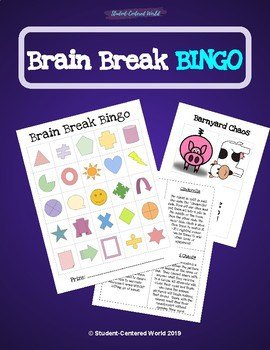
My honest take after years of trial and error? You don’t need a thousand different brain break games. You need a system that builds anticipation and gives students a sense of ownership. A great example of this is Brain Break Bingo, a board with different activities that students could work toward completing, with a bigger reward at the end.
(This post may contain affiliate links that won’t change your price but will share some commission. As an Amazon Associate, I earn from qualifying purchases. Please read our disclosure policy for more information.)
This game is perfect for elementary and early middle-school-aged students.
Before you even start the game, which is ongoing, the class picks an activity that is an “extended” brain break. Think about an extra recess, yoga, etc. Something that is exciting for them, and you can market as the “ultimate brain break”
Once that is decided, the game begins.
The board is meant to hang in an easy-to-access spot, along with the game pieces. I would suggest getting a small container, like this one, to hang on your board near it to hold all the pieces (ad).
The pieces will connect to the board, so my suggestion is to laminate the board and the pieces and then use velcro dots to secure them (clear ones work the best (ad).
When you recognize that your class needs a brain break, pull out a game piece and decide where on the board it goes. Then, you will see which activity that piece correlates with. The activity itself wasn’t always thrilling, but they didn’t know which one would come next until the piece was pulled. That element of surprise did more for engagement than any “fun” activity planned on its own.

Once there are 5 brain breaks that have been completed in a row, the “big” brain break activity can be completed.
This crosses so many things off the list. It helps students get excited about each brain break activity because of the suspense about what it will be. It also keeps them excited about the activities in general because they collectively picked what the prize would be, so heading towards that is also a goal.
It also, subconsciously, teaches students small things they can do when they find themselves needing to regroup. Over time, they will begin to recognize the signs that they need a brain break and develop their own strategies to take one.
Sure, they may not play the same games when they get older, but they will remember what seemed to work to help them calm down, gear up, or focus, and they will adapt to their own needs.
That right there is the win you are looking for.
If you want to check out Brain Break Bingo for your own class, you can find it here.
Why this works
For my high schoolers, I added a competitive element. One game I adapted was a variation of “the points don’t matter” game. Each student got five points to spend on whichever brain break activity they wanted. Once they ran out, they did a burpee for each point they needed. The activity itself became less important than the element of choice and the friendly competition of who completed their burpees fastest.
Another approach that worked well was turning brain breaks into a relay race. I divided the class into small groups, assigned each student a different exercise, and gave each team 20 to 30 seconds to complete as many as possible. The first team to finish all the exercises won. This gave older students a reason to buy in. They weren’t just moving for the sake of moving. They were competing.
The research backs this up. The science is solid. A 2024 study confirmed that students respond differently to different break types, and that physical activity breaks are among the most commonly used and preferred. The University of Connecticut’s research also points to “micro-breaks,” one- to three-minute intentional pauses, as essential for student engagement, especially in high-need settings.
The data doesn’t matter if you can’t get the breaks to work in your classroom. The first time I tried regular brain breaks with my Title I students, they looked at me like I’d lost my mind. I had to start with something that felt safe: a simple stretching break, breathing exercises, or a quick game of “follow the leader” that I led myself. It took the better part of a semester to feel natural.
The biggest shift came when I realized I didn’t have to run every brain break myself. I started rotating leadership so students could pick the activity. That changed everything. When I told students, “You choose. What would help you focus right now? A stretch, a quick movement game, or a minute of quiet?” their ownership was immediate. The same brain break activity that flopped when I chose it suddenly worked when they chose it.

I also stopped thinking about brain breaks as something I had to plan for perfectly. Sometimes I used brain break cards that I printed and laminated. Sometimes I just ask for suggestions. Sometimes we did a quick burst of movement, jumping jacks, or a short walk around the room. The key was to take one to two minutes when I saw students’ energy levels dipping, not to save brain breaks for a scheduled time.
A reality check about classroom breaks. My first few attempts were messy. I tried a freeze dance game with a class that was already hyped up, and they went completely off the rails. The lesson after was a lost cause. What I learned from that failure was to match the break to the class’s current state. If they’re already wound up, they don’t need a high-energy game. That’s when mindfulness, deep breathing, or a calming stretch works better. If they’re lethargic after a long lecture, a quick burst of physical activity is exactly what they need.
The crossover appeal of brain break games is a strength of this strategy. They can double as educational brain breaks by embedding review questions into the movement. When we played silent ball, the rule was that the person tossing the ball had to answer a question before throwing. During a scavenger hunt, students had to find items related to our current unit. This is a great way to keep content fresh without it feeling like work.
Brain breaks that actually work for older students
If you teach middle school or high school, here are three approaches that consistently got buy-in from my students:
- “Around the world” with a twist. One student stands next to a seated classmate, and they race to answer a review question. The winner advances to the next student. The movement is minimal, but the competition keeps them engaged.
- Deck of cards fitness. Assign an exercise to each suit. Squats for hearts, jumping jacks for diamonds, desk push-ups for clubs, toe touches for spades. Have a student draw a card, and the whole class does that exercise for the number shown. This is a fun game that works for small groups or the entire class.
- The thumb-pointer challenge. This is a mental break that requires concentration, not just movement. Students clench their left fist in a “thumbs up” sign while pointing their right pointer finger at the raised thumb. Then they switch positions back and forth as fast as they can. This builds hand-eye coordination and forces the brain to focus on something entirely different from the academic content.
The best part is that once students get used to regular breaks, they start self-monitoring. I noticed my juniors beginning to take their own short breaks during work time. Getting up to stretch, walking to the water fountain, or stepping outside for a minute of fresh air. Over time, they learned to recognize their own signs of mental fatigue and developed strategies for regrouping. They may not play the same games when they’re older, but they’ll remember what worked to help them focus, and they’ll adapt those strategies to their own needs.
Acknowledging the challenge. This shift wasn’t easy. Some students pushed back. Some teachers in my building raised eyebrows. After six weeks of this, something clicked. The students who had been most resistant started reminding me when we hadn’t taken a break. “Ms., we’re dying over here. Can we do a brain break?” It became part of our rhythm, not an interruption.
What about you? What brain break game has actually worked in your classroom, and what flopped? I’d love to hear what you’ve tried with your students, especially if you teach older grades and have found something that gets them moving without the eye rolls.

How do I fit in a brain break when I’m already behind on my lesson?
You can’t afford not to. A one or two-minute break costs almost no instructional time but buys back focus that you’d otherwise lose. I’ve watched lessons derail because students were too tired to learn. The short break prevents that loss.
My students go crazy and won’t calm down after a movement break. What am I doing wrong?
You’re probably using a high-energy break when you need a calming one. Match the break to your students’ energy. If they’re already wound up, use deep breathing, stretches, or a quiet focus activity. If they’re dragging, use a quick burst of physical activity, then follow it with a settling activity like finger breathing.
Are brain breaks different for middle schoolers versus elementary kids?
Yes. Younger students generally respond to more movement-based and playful breaks, like animal walks, freeze dance, or simple Simon Says. Older students need a competitive element or a sense of autonomy to buy in. Both groups need regular breaks, and both benefit from physical activity and mindfulness.
Do I actually need to plan for brain breaks, or can I just wing it?
You can wing it once you’ve built the habit. In the beginning, it helps to have a list, brain break cards taped to your desk, or a pre-made set of activities. After a few weeks, you’ll read the room and know when it’s time.
How long should a brain break actually be?
One to five minutes is the sweet spot. Research from the University of Connecticut suggests that one- to three-minute “micro-breaks” can effectively reset the brain. Research also supports the idea that 15 to 20 minutes of activity yields the greatest cognitive benefit, but that doesn’t have to happen all at once.
What’s the single best brain break game for any grade?
Silent ball. It’s a classic game that works for any age. Students pass a soft ball in silence. If you drop the ball or make a sound, you’re out. It gives students a mental break, builds social interaction, and involves physical movement. It’s one of the most reliable brain break games I’ve ever used.
This article was originally published on January 15, 2020.